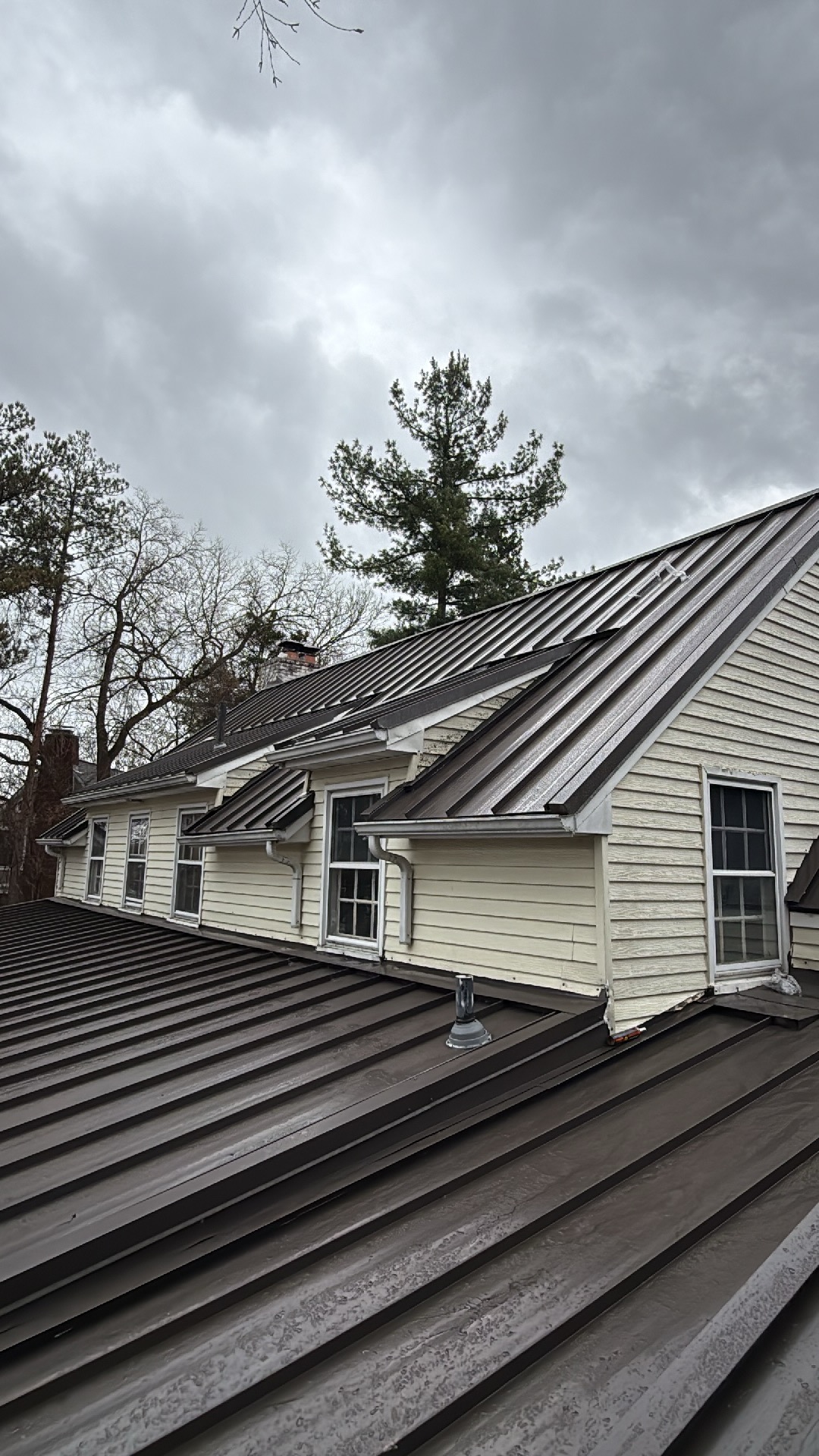
A roof system, not just metal panels
Homeowners often focus on the visible panels, but long-term performance also depends on the roof deck, underlayment, ventilation, clips or fasteners, seams, flashing, closures, sealants, and drainage. Each part must be appropriate for the building and installed correctly.
A quality standing seam system uses raised seams and concealed fasteners, helping reduce direct weather exposure at the primary attachment points. Other metal systems can also perform well when designed and installed for their intended use.
What affects metal-roof lifespan?
There is no single lifespan that applies to every metal roof. Climate, roof slope, tree coverage, moisture exposure, foot traffic, nearby contaminants, material type, coating, and workmanship all influence how a roof ages.
- Correct flashing at walls, chimneys, valleys, and penetrations
- Proper panel movement and fastening
- Good attic ventilation and moisture control
- Timely inspection after major storms
- Repairs made with compatible roofing materials
Maintenance still matters
A metal roof should be inspected periodically and after severe weather. An inspection can identify debris buildup, damaged trim, aging sealants, loose accessories, drainage problems, or impact damage before water reaches the building.
Avoid allowing unqualified trades to cut or fasten through the roof without coordinating the correct flashing. Small penetrations for vents, electrical work, or equipment can become leak sources when they are not detailed properly.
Why installation quality changes everything
Even a premium panel can underperform when measurements, seams, transitions, or flashing are wrong. Experienced metal-roof installers understand how water moves across complex roof areas and how panels expand and contract with temperature changes.
Flores Roofing & Contracting evaluates the full roof assembly and explains which system fits the property. The goal is dependable protection, not simply covering the building with metal.